

Port Galveston Cruise Terminal 10
Galveston Wharves Cruise Terminal is a two story, 160,000 square-foot terminal building designed to maximize cruise terminal operations while creating a welcoming environment for passengers and crew...


Gain deeper insights into the maritime industry with detailed updates on key developments and trends, meticulously curated by our team of specialists.
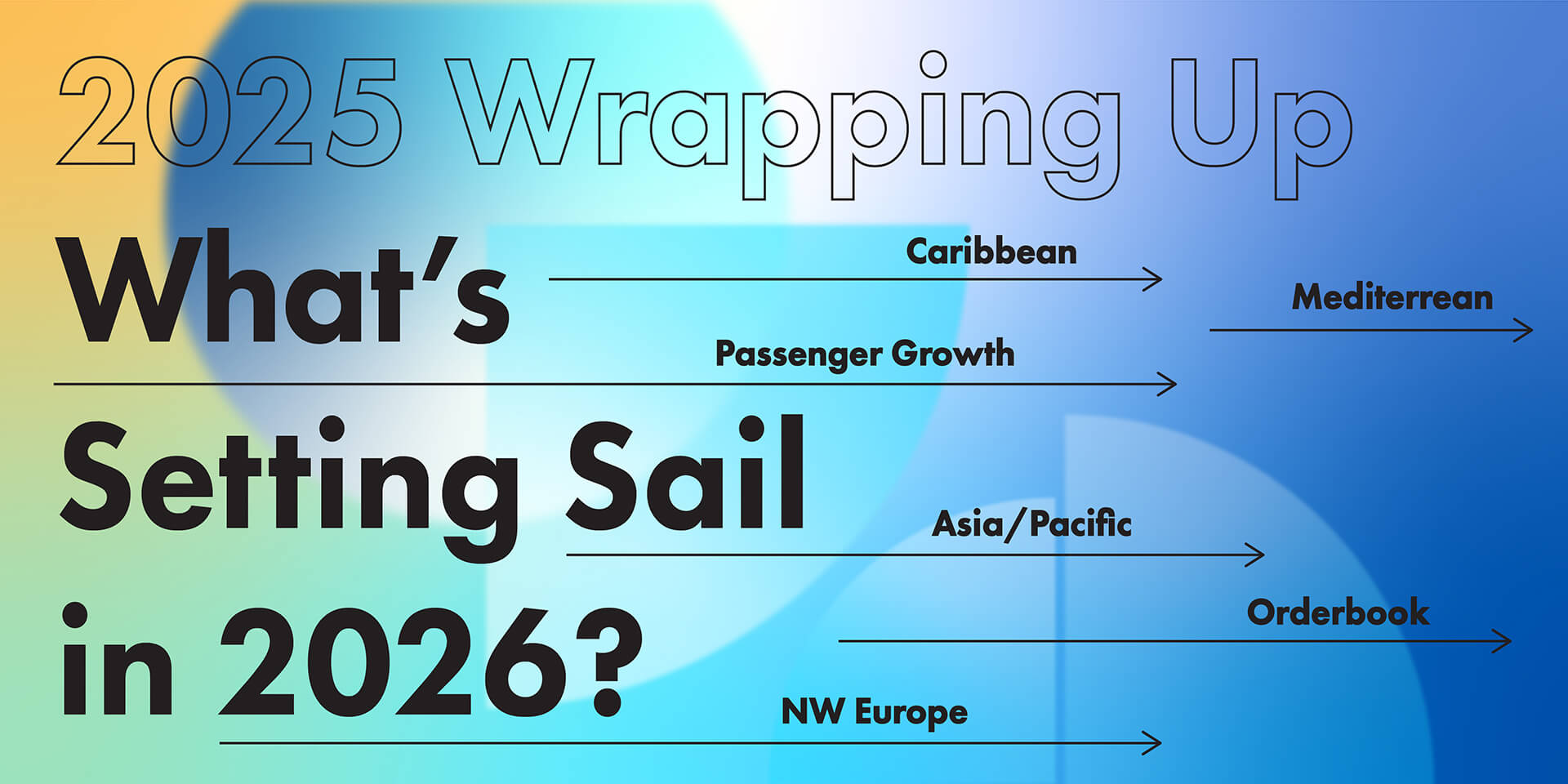
With just three months left in 2025, BA is reflecting on this year's ship deliveries and looking ahead to what 2026 will bring.
By year-end, 14 new cruise ships will have joined the global fleet, adding more than 35,000 lower berths across a diverse mix of products. From mega-ships like Royal Caribbean's Star of the Seas and MSC's World America to luxury and expedition vessels such as Ritz-Carlton's Luminara and Aurora's Douglas Mawson, 2025 delivered something for every market segment, expanding cruise demographics and supporting continued passenger growth.
On the exit side, only the Ocean Atlantic—a 198-passenger expedition ship—formally left the fleet in 2025. While Cruise Industry News reported an uptick in vessel recycling, most of those ships had been laid up in prior years and were only recycled in 2025.
Against this backdrop, the 2026 orderbook comes into focus, with another wave of new capacity on the horizon.
In this edition of BAPerspectives, we spotlight the ships set to debut in 2026, explore which brands are leading passenger growth, and look at where these new vessels will sail.
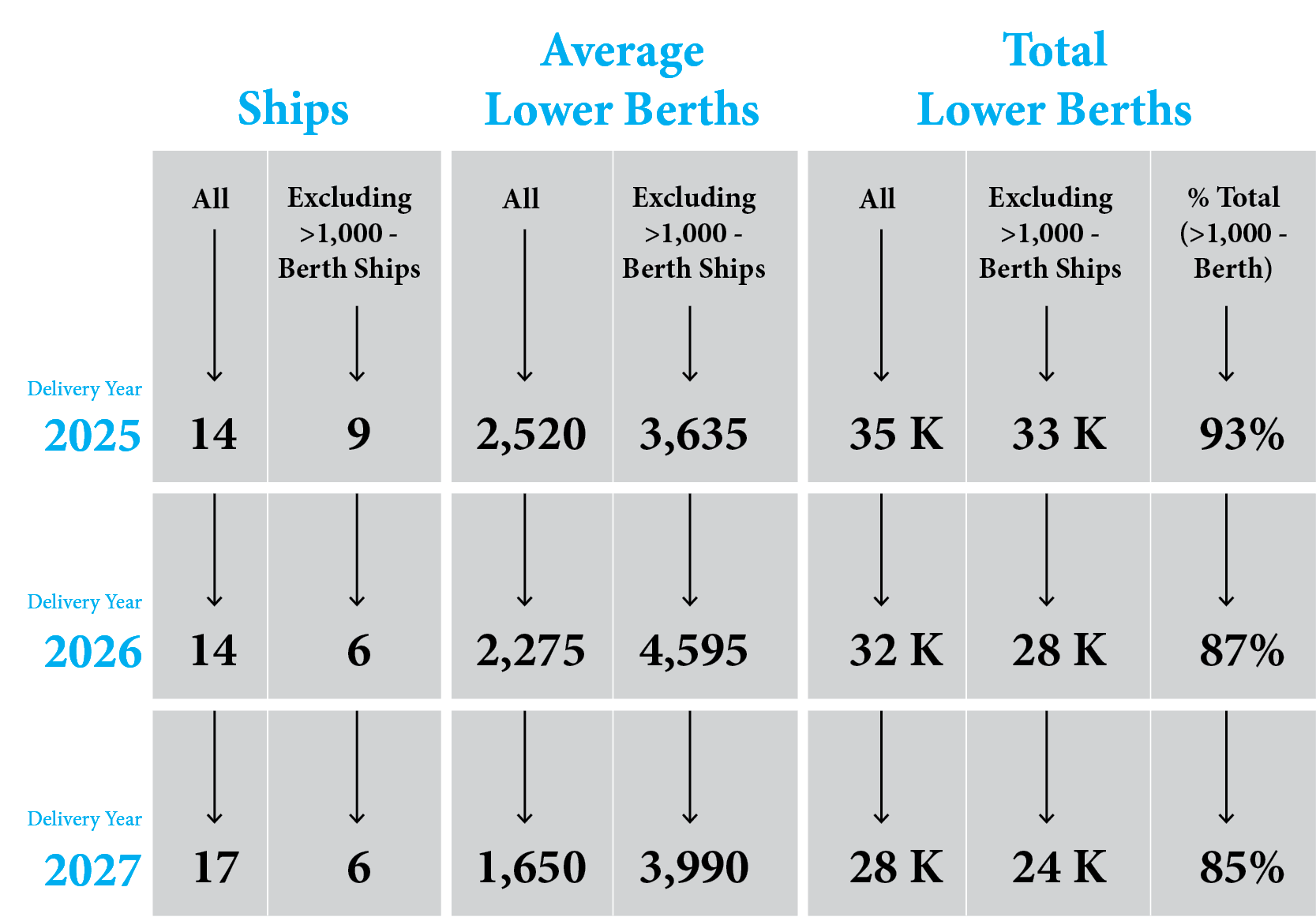
As of today, the 2026 orderbook includes 14 ships totaling 32,000 lower berths. While this represents slightly fewer berths than 2025, year-to-year variations in ship orders are typical. The consistent theme: the industry continues to see positive net new capacity, and in turn passengers, added each year.
Breaking it down by size, 2026 delivers a diverse mix. Eight of the 14 ships have fewer than 1,000 lower berths, including the debut of two new entrants: Orient Express with its 108-berth sailing yacht, Orient Express Corinthian, and Four Seasons with its 180-berth yacht, Four Seasons I. These smaller vessels are intimate, designed to serve niche, high-yield markets rather than scale. This also reflects a recent trend of land-based luxury brands entering the cruise sector, using ships as a way to extend their brand presence into experiential travel.
Collectively, they represent the majority of deliveries but account for only about 14% of new berths.
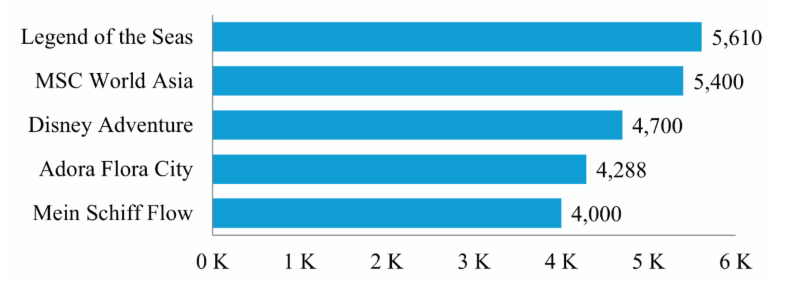
The largest impact on market growth comes from the biggest ships. A single large-ship deployment can swing traffic totals dramatically. Consider the difference between the largest ship entering the market in 2026-- Royal Caribbean's Legend of the Seas (5,610 lower berths with 6,770 max capacity) and Orient Express Corinthian (108 lower berths with 130 max capacity). While both represent exciting additions to the global fleet, the annual passenger capacity of Legend of the Seas is equivalent to nearly 37 years of capacity from the Corinthian if both were fully deployed year-round.
When looking at the top five largest ships entering service in 2026, these vessels represent not only the biggest share of added capacity but also the greatest operational challenges for ports. They require facilities capable of processing thousands of passengers in a single call, ground transportation scaled to manage surges, upland tourism infrastructure to accommodate demand, and city systems that can handle the influx.
By contrast, smaller ships help diversify the cruise demographic, reduce pressure on infrastructure, and spread economic impact across more destinations.
In 2026, 13 operators are represented across 14 ships. Each brand has one delivery, except Viking, which is adding two new vessels.
Despite this broad participation, six brands account for more than 86% of all new lower berths. The chart below illustrates this dynamic: many operators are adding ships, but the majority of passenger throughput growth is concentrated among a handful of top operators — with Carnival standing out as the only major brand not adding newbuild capacity this year.
Cruise ships are typically deployed on a seasonal basis, sailing in one region during the summer and repositioning to another for the winter. These movements align capacity with peak customer demand and favor regions with optimal weather conditions. As part of this analysis, BA reviewed where each of the 2026 deliveries is planned to sail during both the summer and winter seasons.
In 2026, the Mediterranean is set to welcome nearly 40% of all new berths — up from 15% in 2025. This growth is driven by MSC World Asia, which will sail year-round, interporting across Barcelona, Civitavecchia (Rome), Genoa, Malta, Marseille, Messina, and Naples. The remaining eight ships will be deployed seasonally:
The Asia/Pacific region is also seeing notable growth. New operator Adora Cruises will add its second year-round vessel in 2026 sailing from Guangzhou (joining its sister ship homeported in Shanghai). In addition, Disney Adventure (delayed from late 2025) will begin sailing year-round from Singapore on short cruises to nowhere. Together, these two ships add nearly 9,000 berths of consistent capacity to the region (30%).
By contrast, the Caribbean — which captured almost 70% of newbuild capacity in 2025 — will see only about 20% of 2026 berths. Norwegian Luna, homeporting in Miami, is the only ship scheduled for year-round Caribbean deployment, with four others joining the region seasonally for the winter (from the Med) sailing primarily from Fort Lauderdale and Miami.
As 2025 wraps up, the cruise industry is gearing up for another year of growth. From new mega-ships to small luxury vessels, 2026 will bring fresh opportunities for passengers, ports, and destinations alike. With these 14 new ships coming online in 2026—and 49 more on the orderbook from 2027 and beyond—the years ahead look set to keep the industry moving forward and evolving.

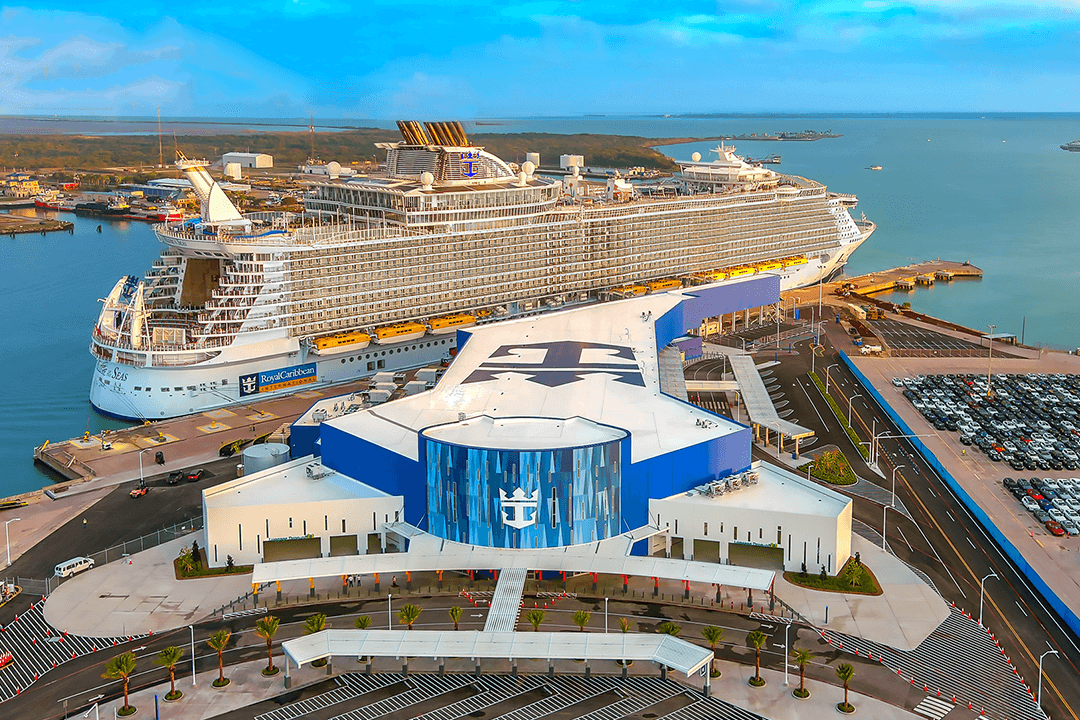
Galveston Wharves Cruise Terminal is a two story, 160,000 square-foot terminal building designed to maximize cruise terminal operations while creating a welcoming environment for passengers and crew...
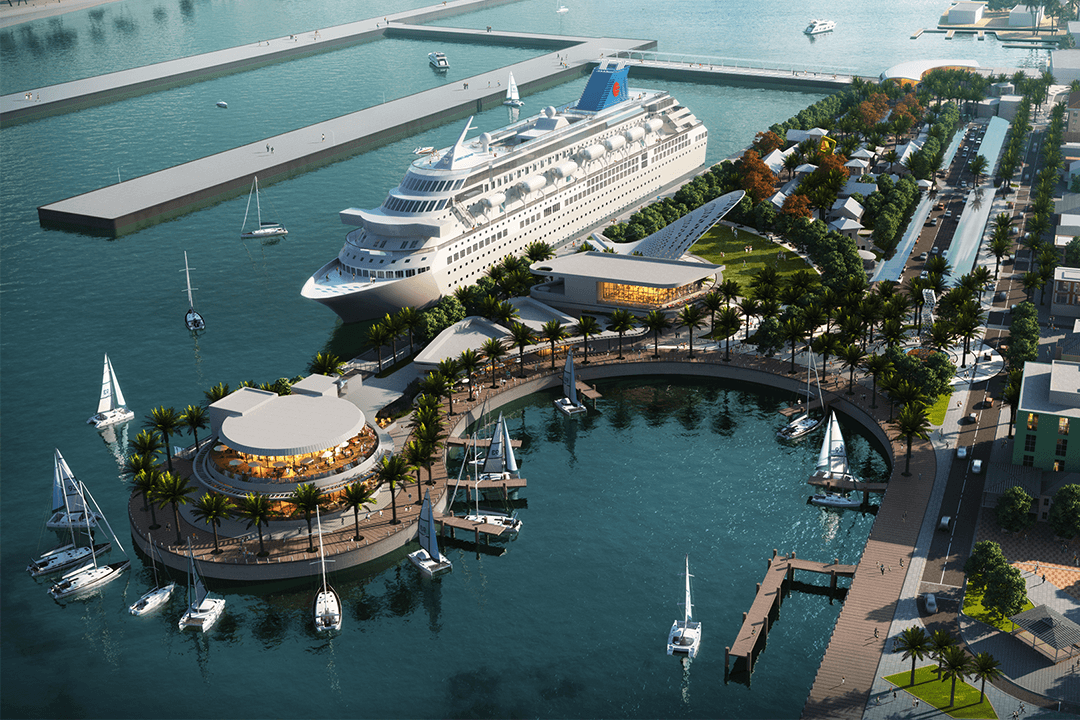
BA's design for the waterfront features a completely transformed Port and Welcome Center, additional mega berths to accommodate the largest cruise ships in the world...
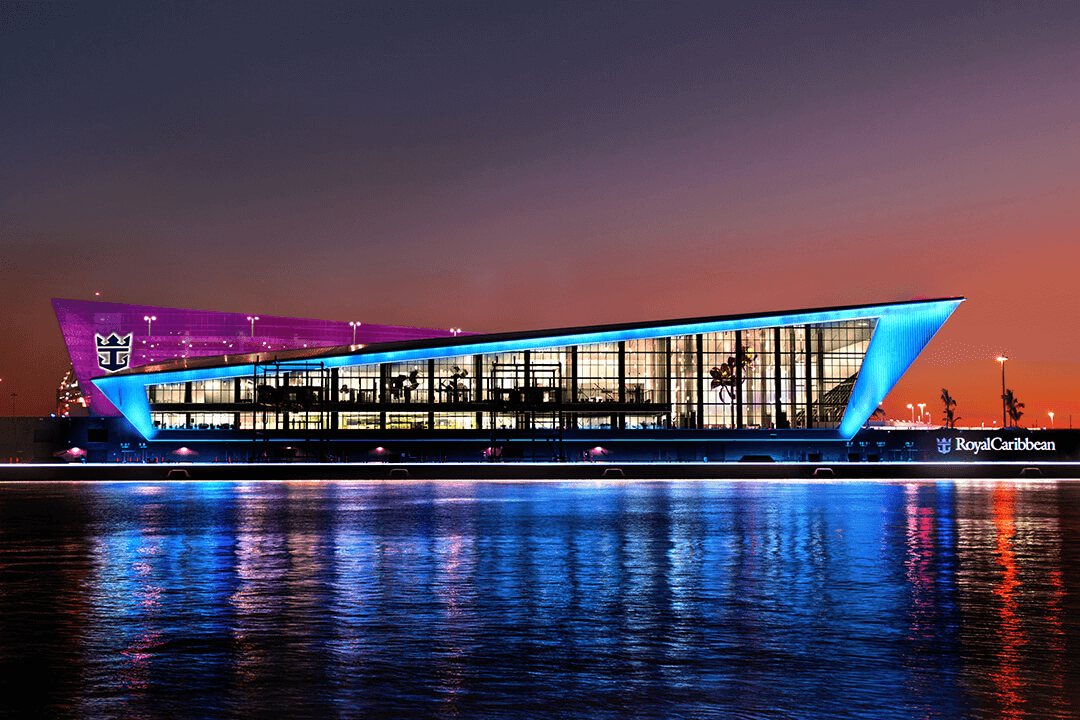
BA was commissioned by RCCL as the architect of record for the new flagship state-of-the-art high-tech Terminal A...

Bermello Ajamil & Partners, Inc. BA, in conjunction with the Renaissance Planning Group, is preparing a Master Plan of the Tampa Port Authority's Waterfront Properties...
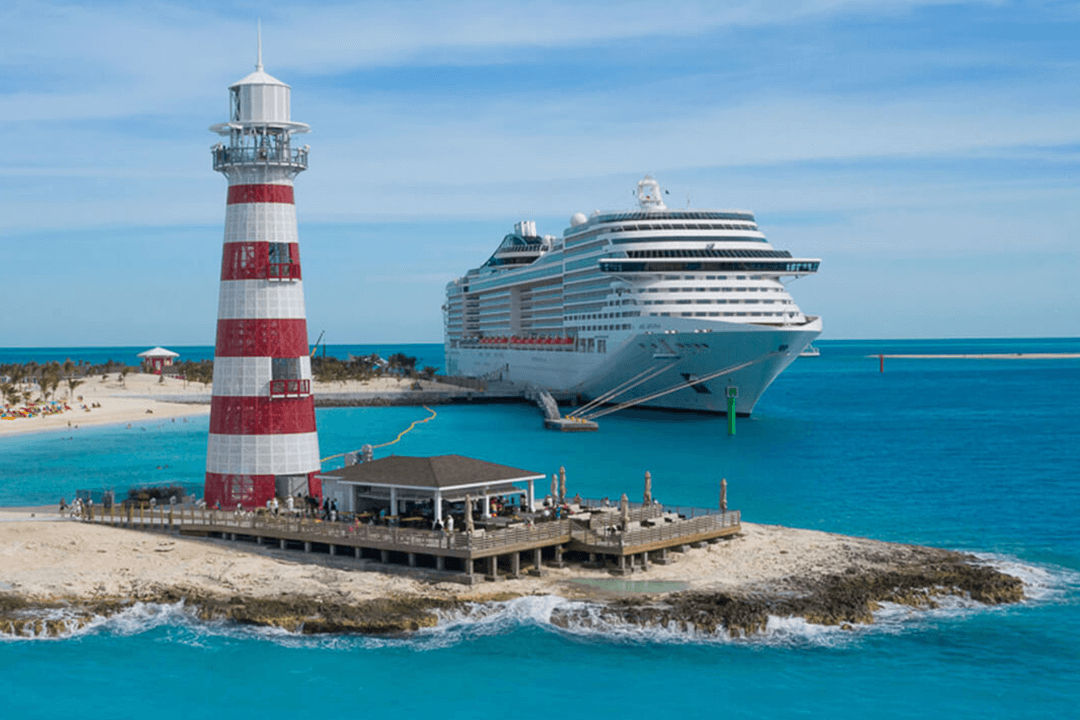
Ocean Cay was a 5-year design-build project that BA led as the prime consultant. The ultimate vision for Ocean Cay was to reinvent what a cruise destination island should be for its guests...
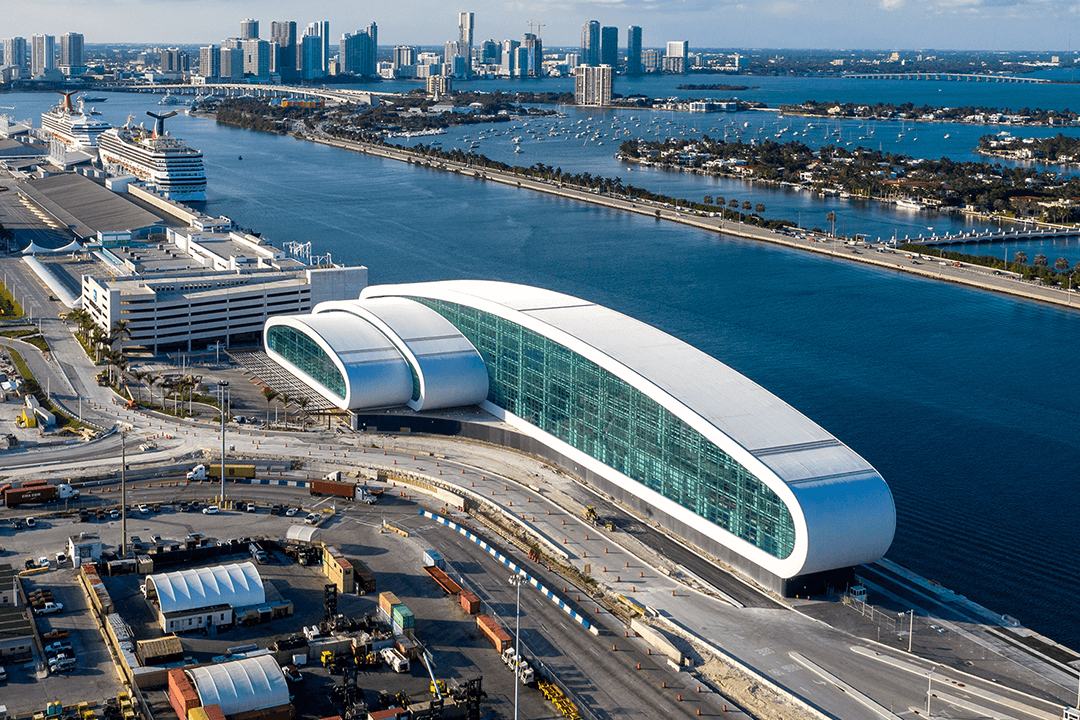
Terminal B accommodates cruise vessels of more than 5,000 passengers, and features new technology to support quicker and more efficient embarkation and disembarkation processes, as well as expedited security screening and luggage check-in...