Port Galveston Cruise Terminal 10
Galveston Wharves Cruise Terminal is a two story, 160,000 square-foot terminal building designed to maximize cruise terminal operations while creating a welcoming environment for passengers and crew...


Gain deeper insights into the maritime industry with detailed updates on key developments and trends, meticulously curated by our team of specialists.
Get the latest on the IMO's decision to delay formal adoption and what it means for ports and cruise operators.
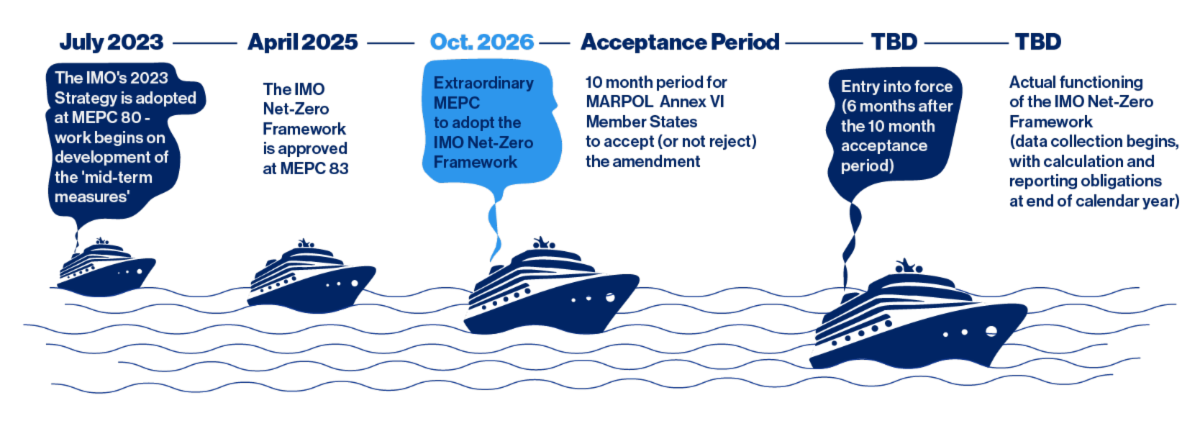
In June, we published a BA Perspectives on the IMO's Net-Zero Framework (NZF), a groundbreaking mandate introducing a mandatory fuel standard paired with a global carbon pricing scheme. At the October 2025 extraordinary MEPC session to adopt the framework, member states1 deferred formal adoption by one year. The adjournment passed with 57 in favor, 49 against, and 21 abstentions, pushing back the framework's development timeline by at least one year.
This decision is a delay, not a reversal. The NZF remains under consideration, while the IMO has been tasked during this one-year postponement with clarifying how the framework will work in practice and to work collaboratively to tackle the ambiguities and concerns of the NZF—covering governance of the fund, specifics of revenue use and distribution, fuel certification and well-to-wake rules, and market mechanics to support implementation, for example.
The IMO's Secretary-General acknowledged that it is "not an ideal scenario," but expressed confidence that, as negotiations evolve across different forums, the IMO will be able to resume business as usual. He further stated his belief that international cooperation among member states will be achieved by strengthening engagement and stakeholder participation during future IMO meetings.
1 As of 2025, the IMO has 176 member states and three associate members. These include nearly all major maritime nations and most UN member states.
CLIA remains steady and pragmatic in response to this announcement. Member cruise lines are continuing their decarbonization efforts regardless of the vote, with near-term focus on:
"The industry's ambition remains the pursuit of net-zero emissions by 2050. In the near term, our members continue to focus on measurable efficiency gains, as well as piloting and increasing the use of lower-GHG fuels subject to safety, availability at scale and performance. Clear, internationally consistent rules will help accelerate progress over time."
Since the recent vote to delay formal adoption, cruise operators remain proactive in moving toward zero emissions:
"The agreement between Repsol and NCLH was established based on the changing international regulatory environment and both companies' pursuit of Net Zero by 2050."
The NZF still appears headed for adoption, and the industry is not waiting despite the recent decision to delay implementation. Operators are pressing ahead. The IMO will have until 2026 to clarify the framework, while the industry continues advancing toward a zero-emissions future. For more, revisit our last perspective on what ports need to know about the framework and the role they can play in the net-zero cruise transition.
Updated Net-Zero Timeline

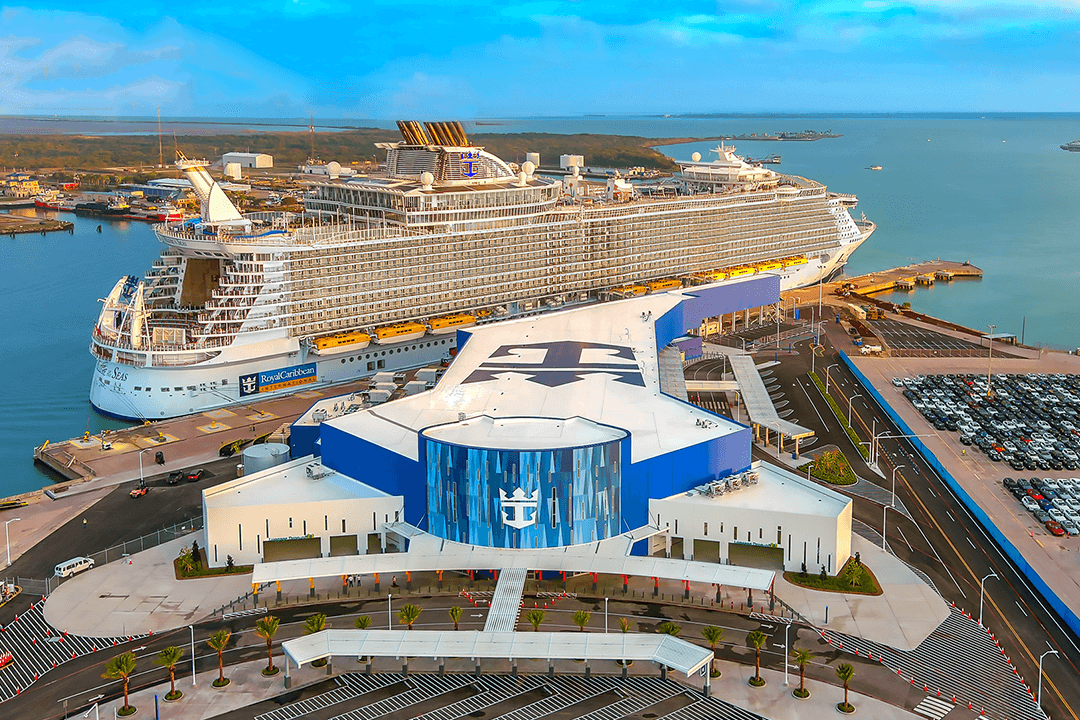
Galveston Wharves Cruise Terminal is a two story, 160,000 square-foot terminal building designed to maximize cruise terminal operations while creating a welcoming environment for passengers and crew...
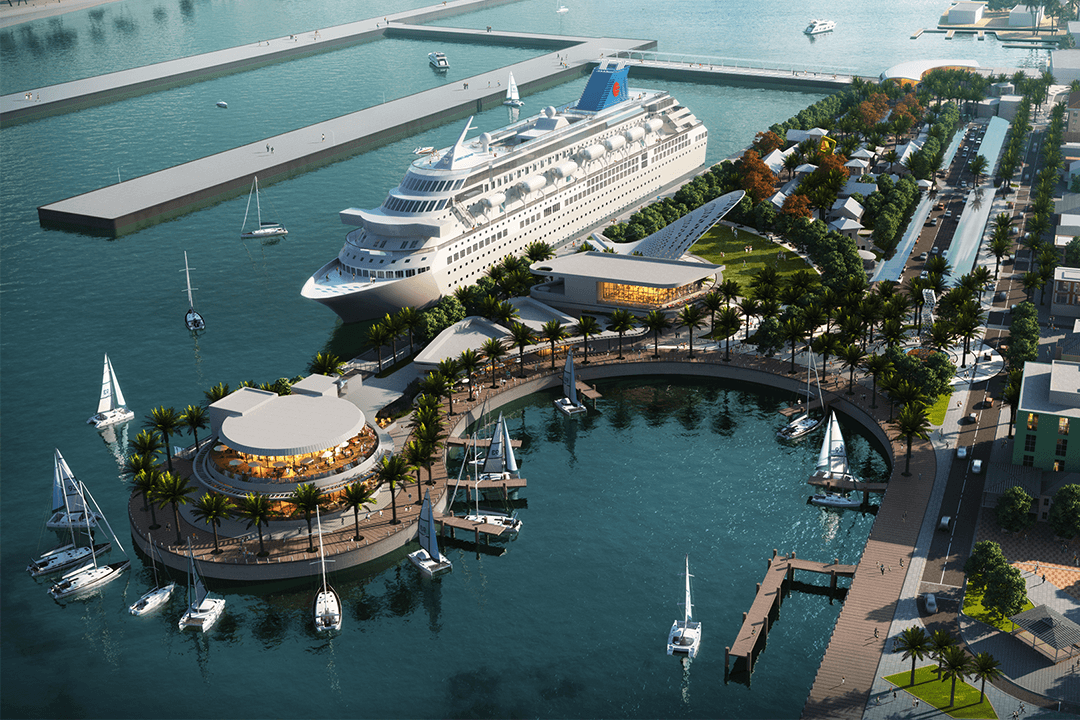
BA's design for the waterfront features a completely transformed Port and Welcome Center, additional mega berths to accommodate the largest cruise ships in the world...
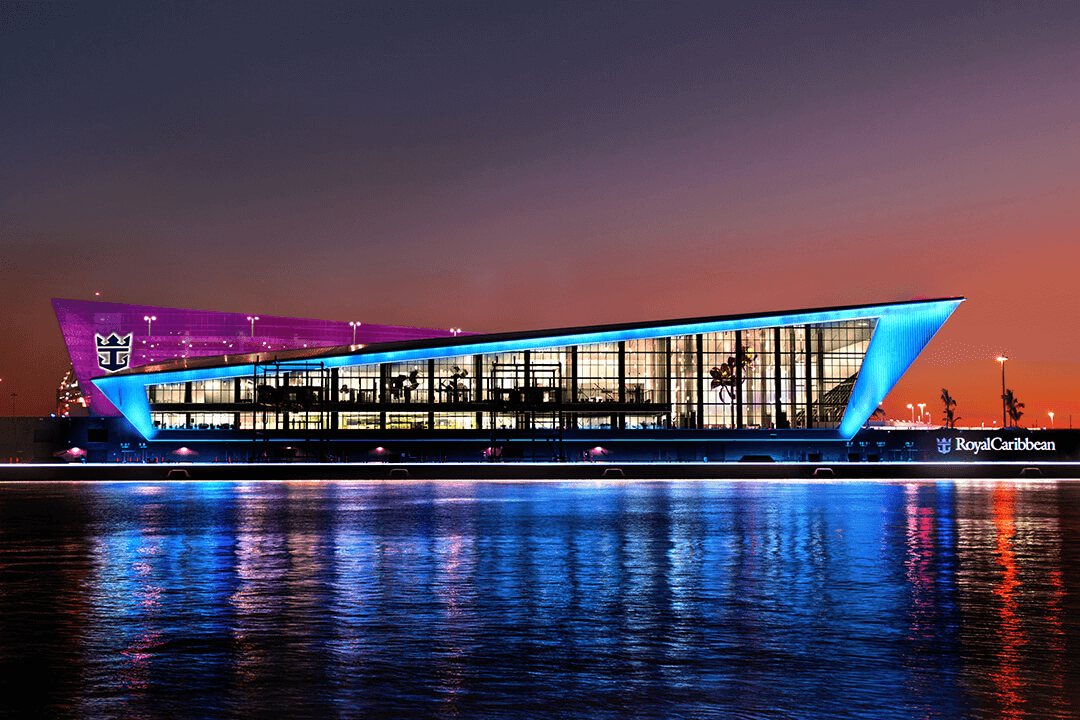
BA was commissioned by RCCL as the architect of record for the new flagship state-of-the-art high-tech Terminal A...

Bermello Ajamil & Partners, Inc. BA, in conjunction with the Renaissance Planning Group, is preparing a Master Plan of the Tampa Port Authority's Waterfront Properties...
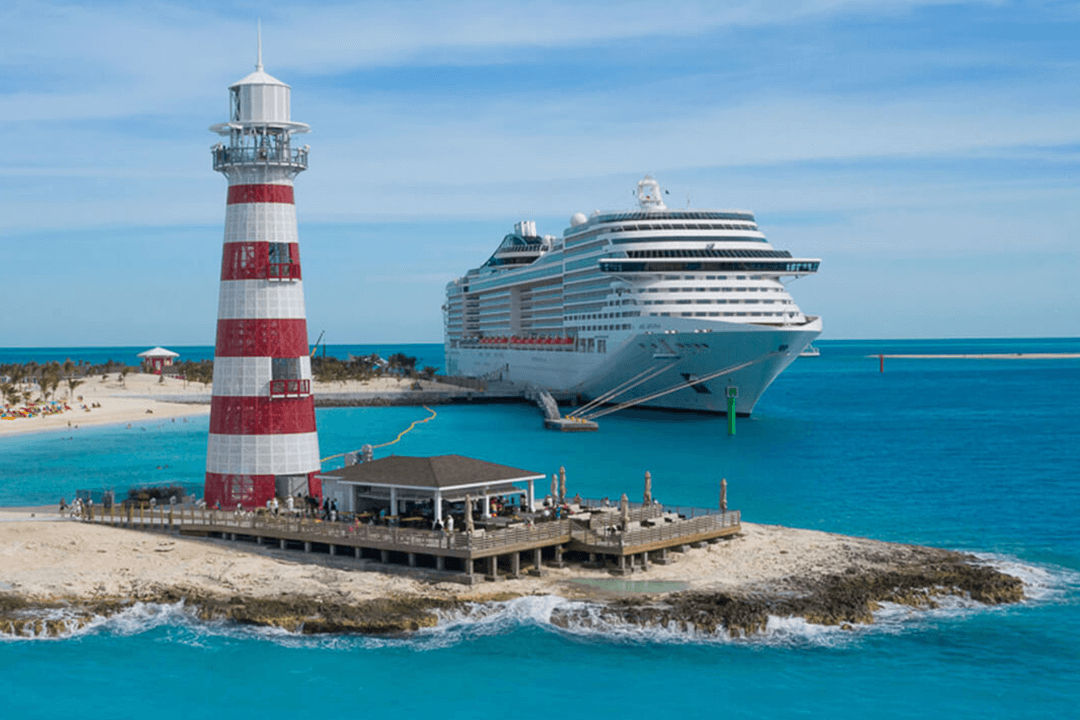
Ocean Cay was a 5-year design-build project that BA led as the prime consultant. The ultimate vision for Ocean Cay was to reinvent what a cruise destination island should be for its guests...
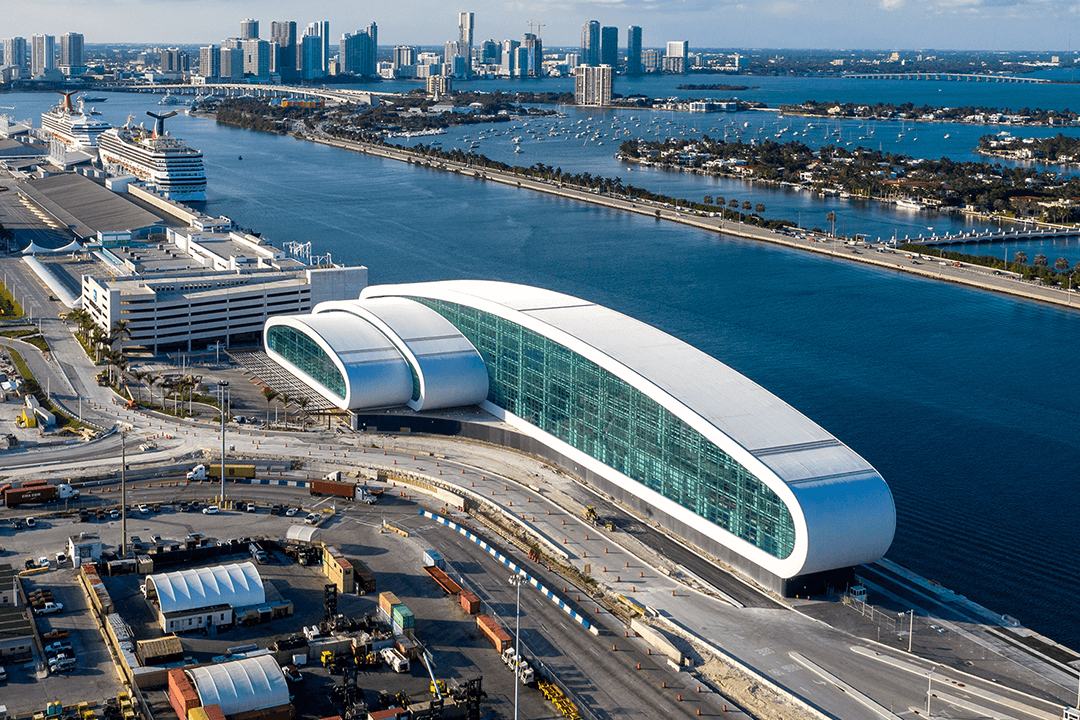
Terminal B accommodates cruise vessels of more than 5,000 passengers, and features new technology to support quicker and more efficient embarkation and disembarkation processes, as well as expedited security screening and luggage check-in...