Port Galveston Cruise Terminal 10
Galveston Wharves Cruise Terminal is a two story, 160,000 square-foot terminal building designed to maximize cruise terminal operations while creating a welcoming environment for passengers and crew...


Gain deeper insights into the maritime industry with detailed updates on key developments and trends, meticulously curated by our team of specialists.
Discover how Q2 earnings reveal resilience in cruising despite challenges — and what the results say about where each operator is headed.
Carnival Corporation (Carnival), Royal Caribbean Group (RCG) and Norwegian Cruise Line Holdings (NCLH) have all now reported second-quarter results, with the final of the three calls wrapping up last week. Carnival and RCG are showing resilient demand against a Middle East conflict that has not resolved, while NCLH's quarter reflects challenges it describes as largely its own.
In this edition of BAPerspectives, we dig into what these results say about where each operator is headed.
Demand held across all three operators this quarter, with the conflict still unresolved. Carnival and RCG point to where their ships happened to be sailing; NCLH points mostly at itself. None of the three would guess at what comes next.
The insight from RCG on the disruption is that it is a calendar problem rather than a trend. RCG's Jason Liberty acknowledged that the conflict "has persisted longer than anticipated," but the damage concentrates in the third quarter because that is when RCG's Mediterranean sailings fall, not because the conflict is moving to any schedule. Liberty put the mechanism plainly, describing Mediterranean sailings as "heavily weighted to Q3." Further, RCG expects yield growth to reaccelerate in Q4 on a more favorable year-over-year comparison, deployment mix and dry-dock timing.
NCLH is not leaning on the conflict at all. Management attributed most of the softness to its own execution. The company set prices too high early in the booking window, demand did not follow, and it spent the rest of the cycle discounting closer to sailing to fill the ships. Its marketing had the same shape of problem: too much of the budget went to travelers who were already close to booking, and not enough to reaching people who had never seriously considered the brand.
Deployment mix explains much of why demand held. Carnival's Josh Weinstein said the Caribbean barely noticed the disruption: "the actual booking trajectory of the Caribbean didn't take much of a movement as we went into the war, during the war, and now have come out. We just seem to be chugging along."
RCG's exposure is contained to the same third-quarter pocket, with Europe at 14% of full-year capacity and 28% of the third quarter. NCLH carries the heaviest European exposure of the three, about 39% of third-quarter deployment, which goes a long way toward explaining why its guidance looks softer than the other two.
Forward bookings point the same way. Weinstein described Carnival's 2027 European bookings as "almost a doubling down" against the pause that hit 2026, with the company at "historic highs for price and occupancy for 2027." RCG's 2027 bookings are "pacing ahead of historical levels, including for itineraries where demand was impacted by geopolitical events this year." NCLH is the exception and says so, describing itself as below its optimal booked position for the next twelve months.
All in all, it appears that consumer behavior is adjusting, rather than retreating. RCG reported guests "primarily preferring closer destinations over international trips due to the cost of air travel," and "booking closer in due to flexibility and ease," which showed up as strong close-in booking volumes rather than as cancellations. Guests did not stop cruising. They changed how and when they committed.
Fuel, the other variable that could have made a hard quarter worse, was largely managed. RCG hedged its way through it, with 58% of remaining 2026 consumption locked in at significantly below market rates and more 2027 hedges added when prices dipped this June. Carnival took the other route, burning less of it: Weinstein reported fuel efficiency improved by more than 5%, on top of more than 6% the year before.
None of that explains why demand is shaped the way it is, only that it held. Short Caribbean cruising is growing, which is well known. What RCG's call revealed is some of the why.
"Half of our guests are millennials or younger now… they like to take shorter vacations. They like to do them more frequently. They tend to spend the same amount of money that they would spend on a short vacation as they would on a long vacation."
That is also the logic behind where the destination money is going. Liberty tied the two together directly: "there's been investments on our destinations, where our guests are seeking to visit places like Perfect Day and the Royal Beach Clubs… that allows us to offer a more elevated short product." That elevated destination product is what lets a three or four-night itinerary compete with a longer one.
But the company confirmed this is additive, not a replacement. Royal Caribbean International's Michael Bayley was explicit that RCG has never walked away from the classic seven-night itinerary, which he called "unbelievably popular," and new Icon-class ships go straight into seven-night Caribbean deployments. The shorter product is pulling in higher frequency and new-to-cruise guests rather than cannibalizing the standard week-long cruise.
It fits a broader read on where travel sits for consumers right now. Liberty said travel "remains the number 1 leisure category where consumers intend to spend more, and they are increasingly seeking vacations as a way to relax, unwind, and escape," which is consistent with the behavior described earlier: guests adjusting how and when they travel rather than pulling back.
The other two operators described their consumers differently. Carnival published no segmentation, resting its demand evidence on the booking curve and record customer deposits of $8.98 billion, while NCLH described who it intends to reach, naming premium families and seasoned travelers as a combined addressable market of more than 35 million consumers.
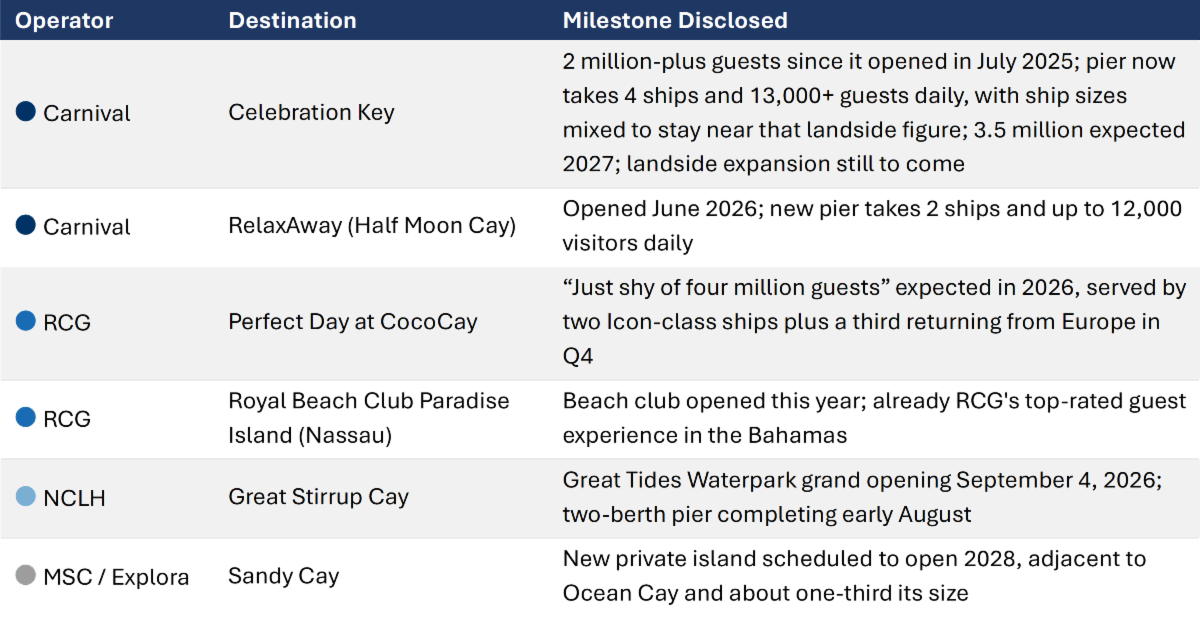
Destination spending is a multi-year commitment, decided well before any given quarter. While nothing new was announced this quarter, each operator disclosed a milestone worth noting, laid out below.
Private Destination Programs and the Milestones Disclosed Q2 2026
Operator Q2 2026 earnings releases, presentations and calls; Sandy Cay per MSC Group's Cruise Division, April 2026, and Seatrade Cruise News (MSC does not report public earnings).
Carnival is pairing Celebration Key's high-energy experience with RelaxAway's mile-long beach, and it's working: approximately 85% of its Caribbean itineraries will call at an exclusive destination in 2027, and roughly half will visit two or more. MSC does not report public earnings, but Sandy Cay, opening 2028 adjacent to Ocean Cay, is a reminder the build-out isn't limited to the operators that do. Worth keeping an eye on the players outside the earnings cycle too.
Not every project is moving forward on schedule. RCG's planned Perfect Day Mexico at Mahahual stalled in May, when Mexico's environment ministry rejected the associated beach club application and declined to authorize a pier modification, and RCG withdrew the waterpark application ahead of a ruling. Jason Liberty acknowledged on the call that RCG is continuing to engage with community leaders and local officials, calling it "a process that will take some time and is expected to affect our previously planned timeline," and named no revised date. A company spokesperson said in May that RCG remains "optimistic in the potential to advance our investment responsibly," and RCG pledged a community center at Mahahual in July. There has since been informal talk of the project moving forward in a different form or location, though whether and where it moves forward is still an open question.
The clearest thing each company said this quarter was how much capacity it intends to add. RCG is growing capacity 6.6% this year and has guided 4%, 6% and 7% through 2029. Carnival is holding near 1%, and Weinstein said that while more vessels will be ordered for the 2030s, "we have no plans to deviate from our one to two ships per year cadence."
Weinstein framed the capacity choice against competitors' Caribbean supply: "the capacity increase outside of us is 27% over two years… I'll take the no growth." What Carnival funds instead is the fleet it already has.
NCLH is moderating to a 2.5% compound annual growth rate net of long-term charters, with deliveries dropping to one ship in each of 2028 and 2029 and newbuild and growth capital spending declining by nearly $1 billion annually. Five ships leave the fleet over the next three years, including Oceania Sirena, which NCLH agreed to sell under a leaseback that keeps it in service until the ship transfers in spring 2028.
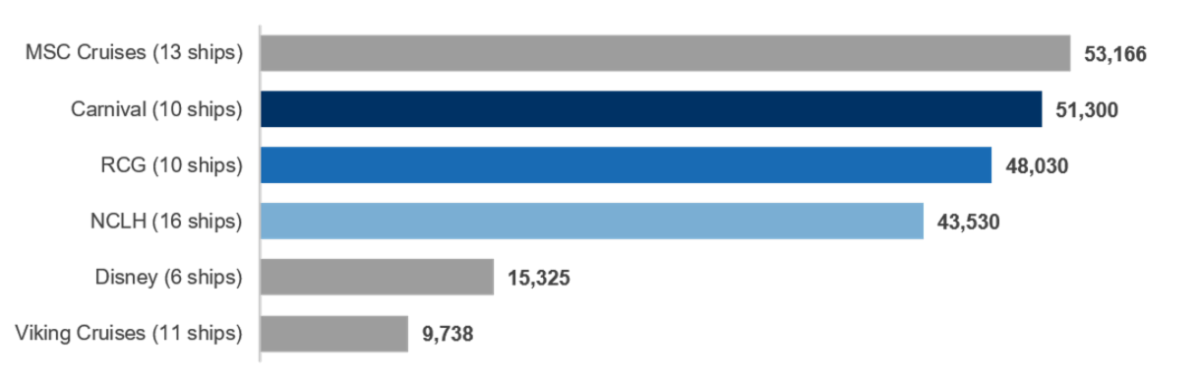
Lower Berths on Order by Corporation, Ships on Order in Parentheses
BA Maritime Cruise Fleet Sheet, ships on order as of June 26, 2026.
The order book confirms the same divide in absolute terms. MSC, which doesn't report public earnings, carries the largest order book on the chart, 13 ships and about 53,200 lower berths, more than any of the three public operators. Among those three, Carnival has 10 ships on order carrying about 51,300 lower berths, an average near 5,100 apiece, in line with the measured, larger-ship approach Weinstein described on the call. RCG's 10 ships carry about 48,000. NCLH has the most hulls of the three at 16, but they total about 43,500 berths, an average nearer 2,700, reflecting a fleet mix weighted toward smaller premium and luxury vessels across its brands rather than the larger ships Carnival and RCG are ordering.
None of this is new for the industry. Cruise has grown almost every year for decades, including through downturns that would have seriously impacted other sectors, largely because so much of the business can be modified: price against available supply, ships between regions with better margins or safer geopolitical situations, and adjusting itinerary length based on consumer willingness to pay. Land-based hospitality doesn't have that option; a hotel is a fixed asset in a fixed place. This quarter is a small-scale version of the same flexibility. Carnival shifted occupancy in Europe rather than discount. RCG hedged fuel and leaned into Caribbean pricing. NCLH is cutting cost rather than capacity. Different strategies, but the same idea.
What the quarter clarified is what each company is positioned to grow, and at what pace. Carnival's next increment of capacity is throughput at destinations it already owns, not new ships. RCG is adding both, growing the destination portfolio while carrying the most ambitious capacity growth of the three, 4%, 6%, and 7% through 2029. NCLH has destination enhancements coming online this year, and then a step down in spending, with the turnaround funded by cost savings rather than growth.
Full-year outlooks moved with those positions. RCG raised its guidance, Carnival nudged its earnings outlook up while trimming what it expects from yields, and NCLH cut.
The consumer is still willing to book, and operators remain optimistic through a conflict none of them can schedule. That is the industry's pattern holding again: a resilient industry that adjusts, and comes out the other side still building.


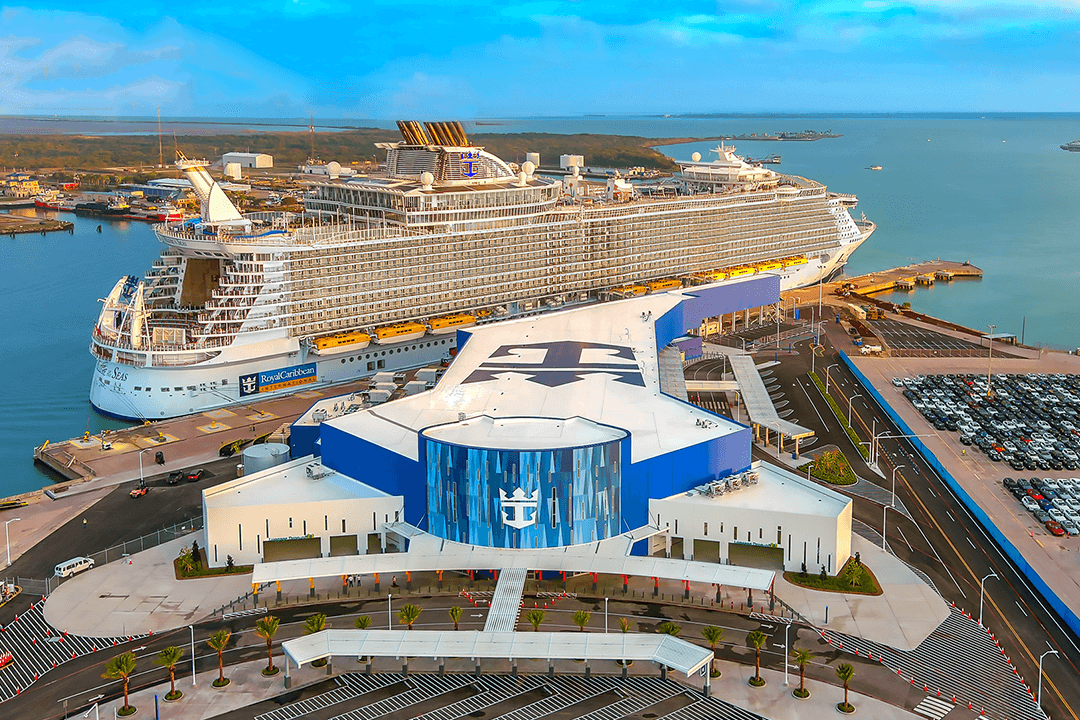
Galveston Wharves Cruise Terminal is a two story, 160,000 square-foot terminal building designed to maximize cruise terminal operations while creating a welcoming environment for passengers and crew...
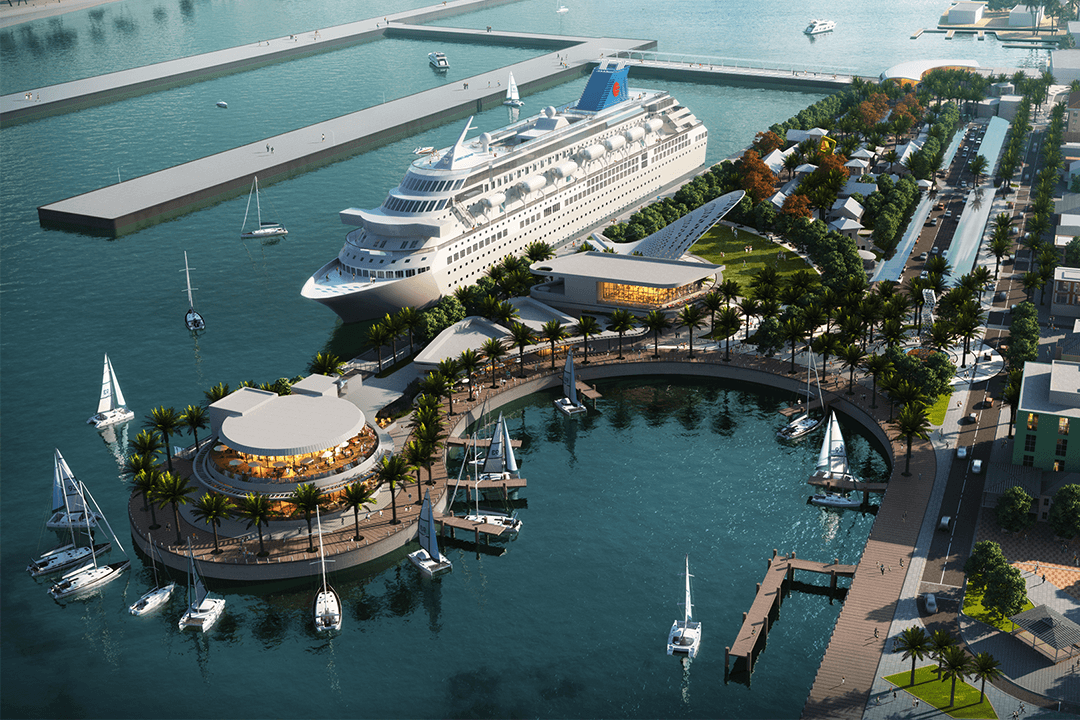
BA's design for the waterfront features a completely transformed Port and Welcome Center, additional mega berths to accommodate the largest cruise ships in the world...
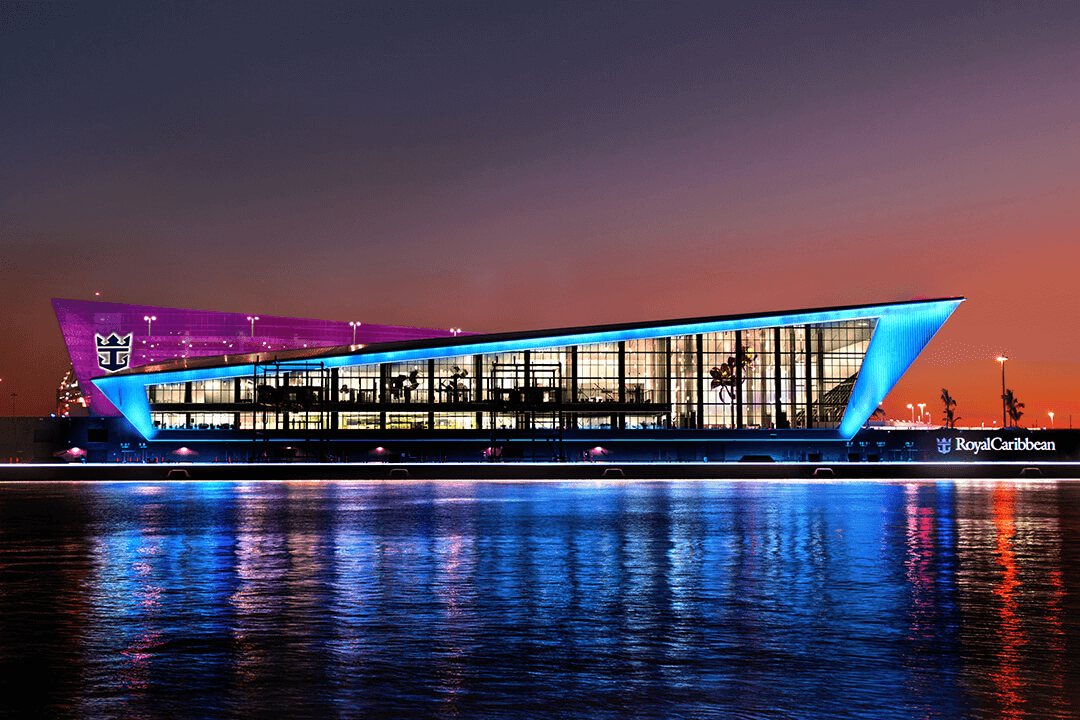
BA was commissioned by RCCL as the architect of record for the new flagship state-of-the-art high-tech Terminal A...
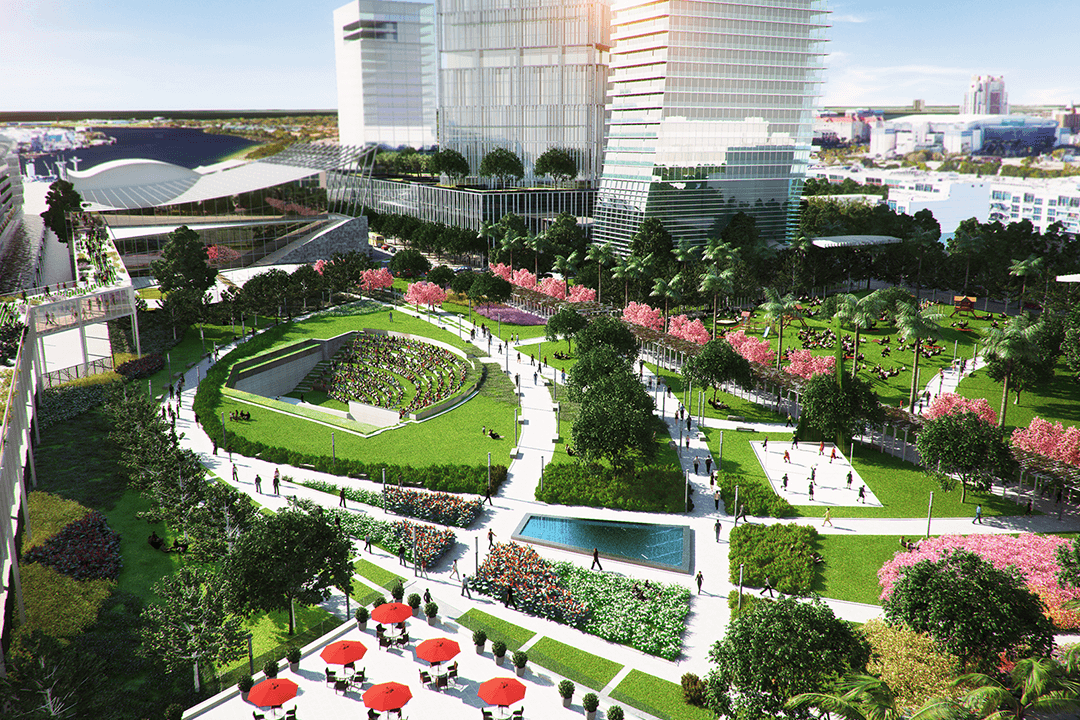
Bermello Ajamil & Partners, Inc. BA, in conjunction with the Renaissance Planning Group, is preparing a Master Plan of the Tampa Port Authority's Waterfront Properties...
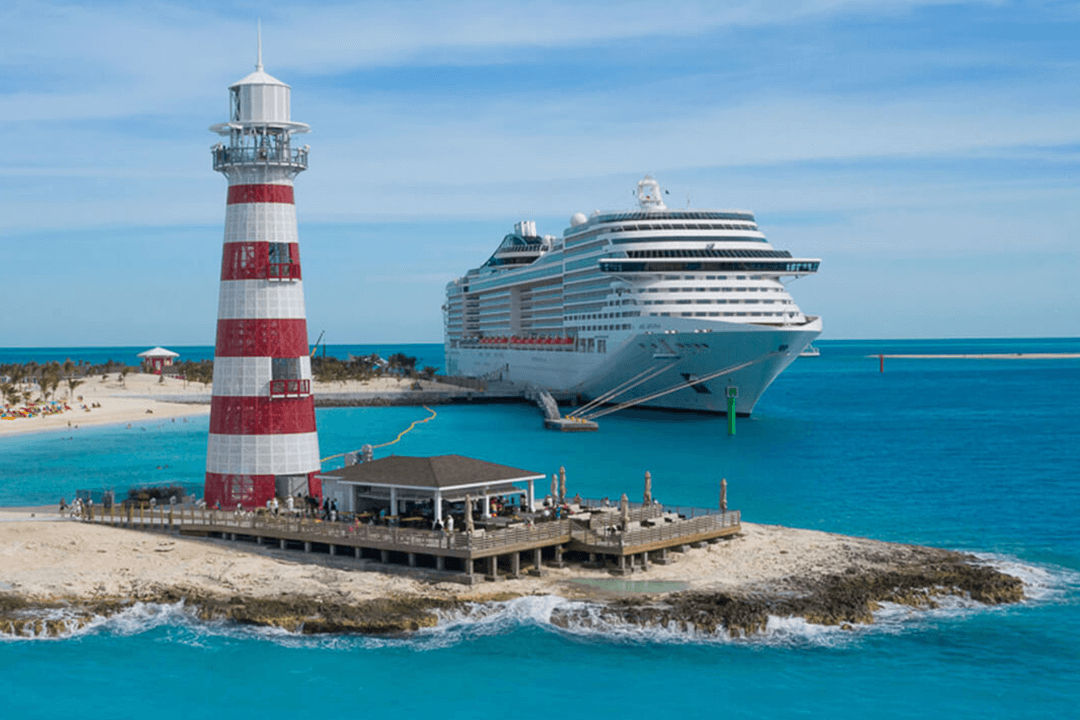
Ocean Cay was a 5-year design-build project that BA led as the prime consultant. The ultimate vision for Ocean Cay was to reinvent what a cruise destination island should be for its guests...
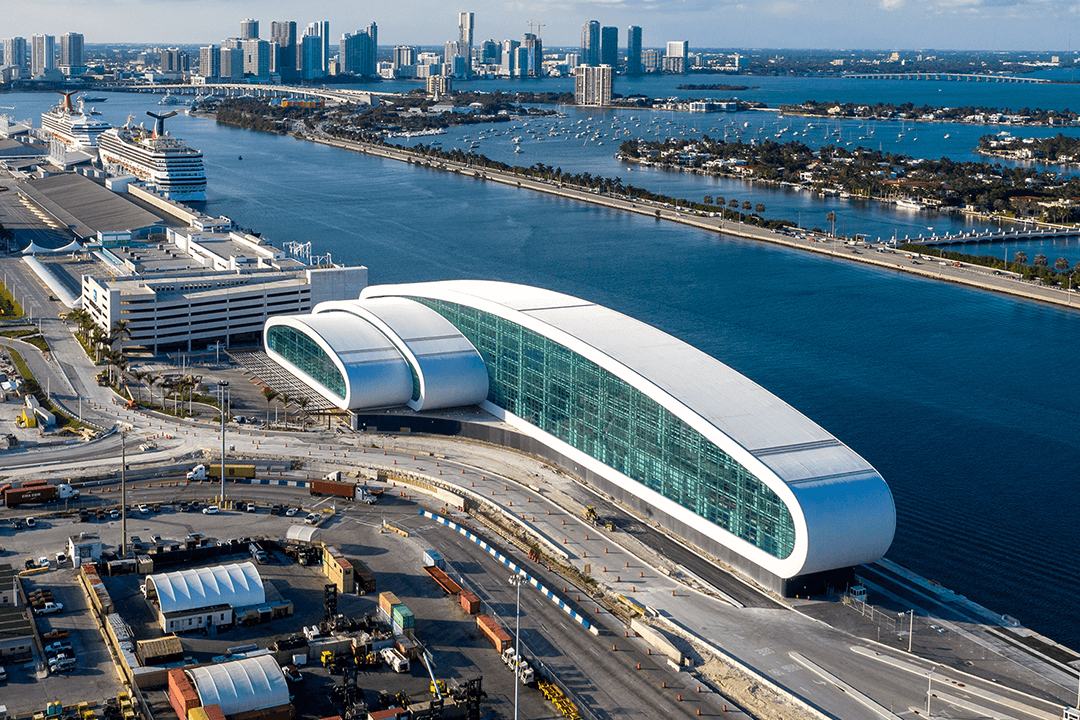
Terminal B accommodates cruise vessels of more than 5,000 passengers, and features new technology to support quicker and more efficient embarkation and disembarkation processes, as well as expedited security screening and luggage check-in...